News announced October 14, 2026 · Analysis published October 26, 2026. This is an editorial planning exercise, not a tested campaign or a prediction of viral reach.
The news—and the useful takeaway
Google launched its 2026 Frightgeist search-trend collection on October 14. Its announcement highlights Halloween costumes, party ideas and film searches, including growing interest in nostalgic Halloween viewing. Read Google’s original announcement, checked October 26.
Our take: use the report to choose a specific audience question, not to copy a list of popular terms. For a creator, a helpful small demonstration is a more coherent starting point than a video containing every seasonal keyword. The report does not establish demand for your product or guarantee traffic to a new page.
Three original briefs you can adapt today
The ideas below are our suggestions, not Google recommendations or observed winners. Start with footage and materials you already have. Do not buy another AI subscription just to test an angle.
| Audience question | Small video concept | Useful next step |
|---|---|---|
| How can my ordinary room look spooky on camera? | Show one owned room in a neutral shot, then change lighting and framing. Explain what changed rather than presenting an AI scene as real footage. | Offer a shot checklist the viewer can repeat. |
| How do I make a nostalgic Halloween edit? | Use your own clips to demonstrate three deliberate choices: slower pacing, a restrained palette and an original title card. | Link to an editing brief, not an unrelated product list. |
| Will an AI treatment preserve my costume details? | Define three visible details that must survive, then compare a short input with its output if you actually perform the test. | Provide a comparison worksheet and disclose the tool and settings used. |
Do not manufacture a before-and-after result. If you have not generated or filmed a sample, label the page as a concept or storyboard. A reference to a popular film is not permission to reuse its scenes, soundtrack or promotional images; use material you are entitled to publish.
A five-line production brief
- Viewer: name one audience, such as a solo creator filming at home.
- Question: state the single problem the clip answers.
- Proof: list the actual footage or comparison you will show.
- Constraint: specify what must stay recognizable, such as a costume pattern or face.
- Next step: choose one relevant checklist, guide or tool.
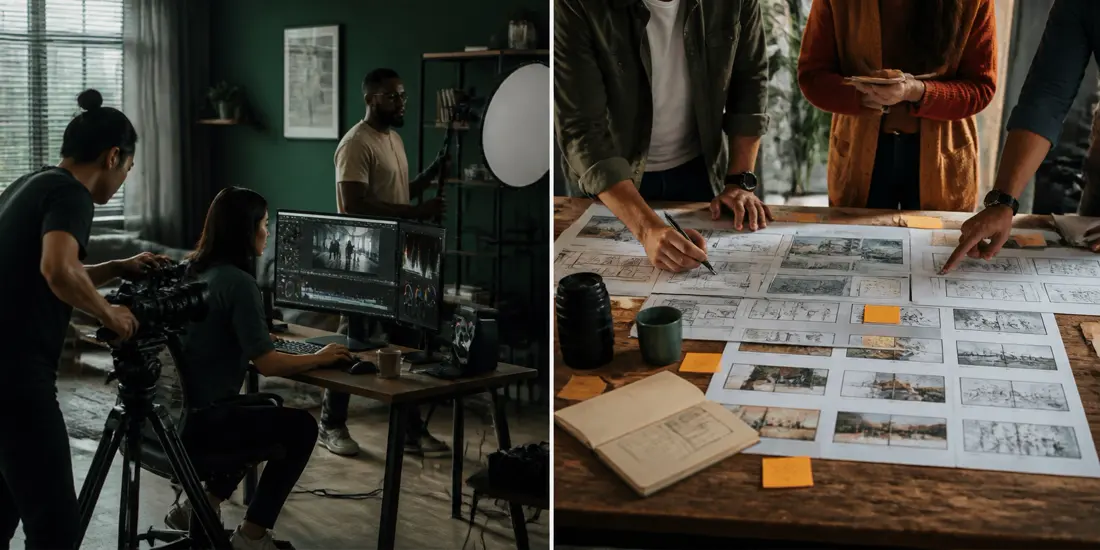
Example storyboard: begin with the finished room shot, show the unchanged camera position, explain two lighting adjustments, and finish with the checklist. This is an illustrative plan, not a video we have produced. A clear demonstration can still fail to find an audience; test the premise before expanding it into a series.
Publish now, or save the idea?
With Halloween close, a newly indexed article may not reach searchers in time. If you already have a relevant audience, one honest demonstration may be useful now. If you have no sample, no distribution route and no time to verify it, save the brief for a broader seasonal-editing guide rather than rushing an unsupported review.
Keep the year in time-sensitive headlines. After the event, label the article as an archive or update it with genuinely new evidence. Changing the date alone would not make an old trend report current. This page remains a 2026 example, not an evergreen ranking of what is trending today.
Separate attention from useful visits
For your own published test, record impressions, visits to the relevant guide, and completed actions separately. A popular clip with no interested visitors is not proof of a successful acquisition channel. Likewise, a product-link click is not an approved affiliate commission. Do not report a win until the outcome you intended is visible in your own data.
Use a distinctive campaign label when sharing a link so you can distinguish this experiment from other traffic. Compare the audience question and follow-through, not just the headline. We have not measured traffic, sales or conversion lift from these concepts.